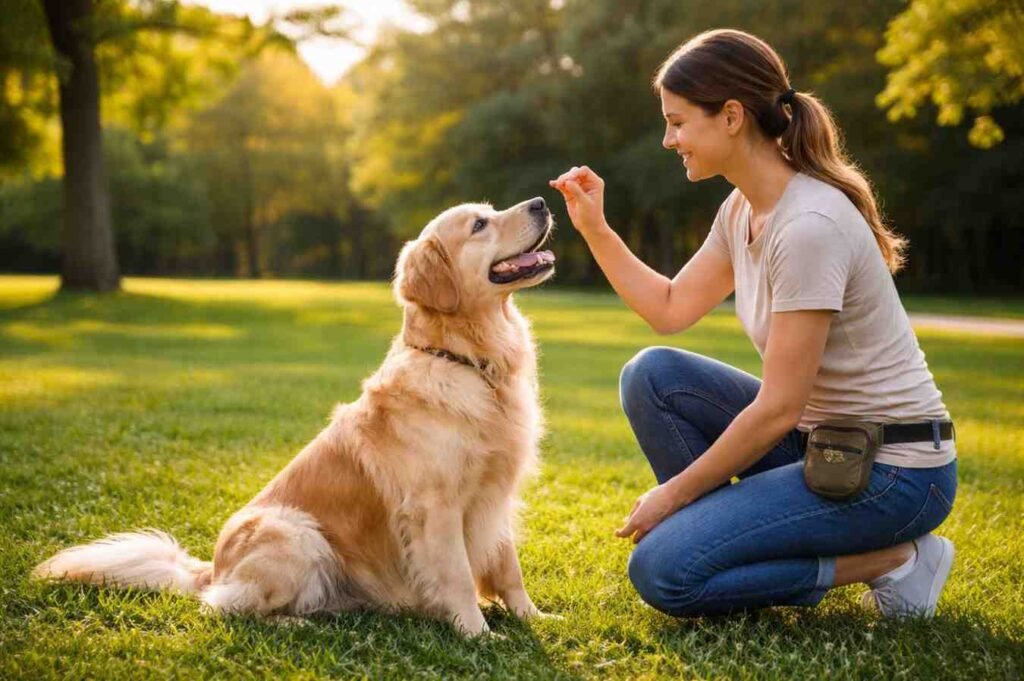
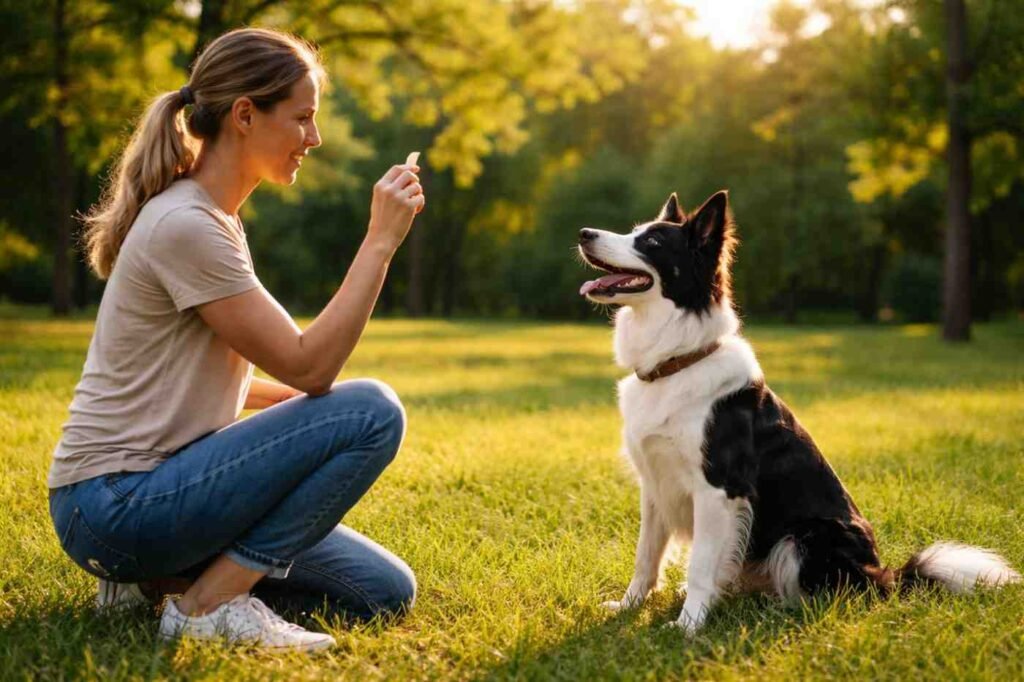
Anyone who has tried training a dog knows the moment. You call their name, give a command, and instead of looking at you, they’re suddenly fascinated by a leaf, a smell, or a passing squirrel. It’s not stubbornness. Most of the time, it simply means the dog hasn’t learned that focusing on you is the most rewarding option available.
Improving focus isn’t about stricter commands or louder cues. It’s about building engagement. When a dog learns that paying attention to you leads to rewards, play, and positive experiences, their attention begins to shift naturally. Over time, focus becomes a habit rather than something you constantly have to demand.
Why Many Dogs Struggle With Focus

Dogs experience the world very differently from humans. Their senses, especially smell and hearing, are constantly pulling them toward new stimuli. When training begins in busy or stimulating environments, dogs often become overwhelmed and unable to concentrate.
Another common issue is inconsistent training. If commands are used randomly or rewards are unpredictable, dogs struggle to understand what behavior earns attention. Focus training works best when expectations are clear and reinforcement is consistent.
The environment also plays a major role. A dog that listens perfectly inside the house may appear distracted outside simply because the environment is far more stimulating. Strong focus develops gradually as dogs learn to prioritize their handler even when distractions appear.
The Foundation Of Strong Dog Attention

At its core, focus training teaches dogs that engagement with their handler is rewarding. Instead of competing with the environment, training turns attention into a game where the dog willingly checks in.
One key principle is practicing attention in low-distraction environments first. Quiet spaces allow dogs to understand the behavior without competing stimuli. Once the habit is established, distractions can be added gradually.
Short training sessions are also more effective than long ones. Dogs process learning best in brief, engaging bursts. A few minutes of focused practice several times a day usually produces better results than a single long session.
Rewards matter as well. During attention training, high-value treats or favorite toys should be used so the dog associates focus with something exciting.
Practical Training Habits That Improve Focus

Developing focus doesn’t require complicated techniques. Simple, consistent habits during daily interactions often make the biggest difference.
Some practical habits that improve a dog’s attention include:
- Use high-value rewards during training. Small pieces of chicken, cheese, or a favorite toy often work better than regular treats.
- Keep training sessions short. Two to five minutes of focused practice helps maintain engagement without overwhelming the dog.
- Introduce distractions gradually. Increase difficulty slowly so the dog can succeed at each step.
- Reward voluntary attention. If the dog looks at you without being prompted, acknowledge and reward it immediately.
These small habits teach dogs that paying attention always leads to something positive.
Focus Exercises That Build Attention Skills

Once the foundation is set, structured exercises help strengthen attention and engagement. These drills are commonly used by professional trainers because they build focus quickly and reliably.
Some of the most effective focus exercises include:
- “Watch Me” or “Look” command
Hold a treat near your dog’s nose and slowly move it toward your eyes. The moment the dog makes eye contact, mark the behavior with a cue like “Yes” and reward immediately. This exercise teaches dogs that eye contact earns rewards. - Name recognition training
Say your dog’s name in a cheerful tone. When they look at you, reward instantly. Over time, the name becomes a reliable attention signal. - Hand targeting (“Touch”)
Present your open palm near your dog’s nose. When they touch it with their nose, reward them. This simple exercise acts as a reset tool when dogs become distracted. - Voluntary attention practice
In a quiet environment, simply wait for the dog to look at you on their own. Reward every check-in. This teaches dogs that choosing to engage is always valuable.
These exercises gradually train dogs to shift their focus from the environment back to their handler.
Using The “Three Ds” To Strengthen Focus
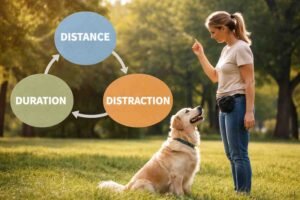
As dogs begin to understand attention cues, training difficulty can increase. Trainers often rely on a simple rule known as the Three Ds.
The Three Ds help add challenge without overwhelming the dog:
- Distraction – introducing environmental stimuli
- Distance – increasing space between handler and dog
- Duration – asking the dog to hold attention longer
Only one of these factors should increase at a time. If distractions increase, keep the distance short and duration brief. This balanced approach prevents frustration and maintains consistent progress.
Common Mistakes That Reduce A Dog’s Focus

Sometimes focus problems develop not because of the dog, but because of the dog training mistakes that unintentionally weaken attention.
One common mistake is repeating commands too often. If a cue is given multiple times without consequence, dogs quickly learn they can ignore it. Another mistake is training in highly distracting environments too early. Dogs need time to understand behaviors before distractions are introduced.
Using a dog’s name for corrections can also reduce engagement. When a name becomes associated with negative experiences, dogs may hesitate to respond. Names should ideally signal something positive.
Consistency, clarity, and patience are essential. Dogs build focus through repeated successful experiences.
FAQs: How To Improve A Dog’s Focus And Build Better Attention Skills
1. Why does my dog lose focus so easily during training?
Dogs are naturally curious and easily distracted by smells, movement, and sounds. Training in environments that are too stimulating can overwhelm their attention. Starting in quieter areas usually helps build stronger focus.
2. How long does it take to improve a dog’s focus?
Improvement depends on the dog’s age, temperament, and consistency of training. With daily practice, many dogs begin showing better engagement within a few weeks.
3. What rewards work best for focus training?
High-value rewards usually work best. Small pieces of chicken, cheese, or a favorite toy can motivate dogs more effectively than standard treats.
4. Can older dogs still learn focus training?
Yes. Dogs of any age can improve attention with consistent training. Older dogs may learn slightly slower, but they are fully capable of developing strong engagement habits.
Final Thoughts
Improving a dog’s focus is less about control and more about connection. When dogs learn that paying attention leads to rewards, play, and positive interaction, their engagement grows naturally. Focus training becomes easier when it’s woven into everyday life rather than limited to structured sessions.
With patience and consistent practice, even easily distracted dogs can develop strong attention skills. Over time, that simple habit of checking in transforms training, communication, and the overall relationship between dog and owner.