
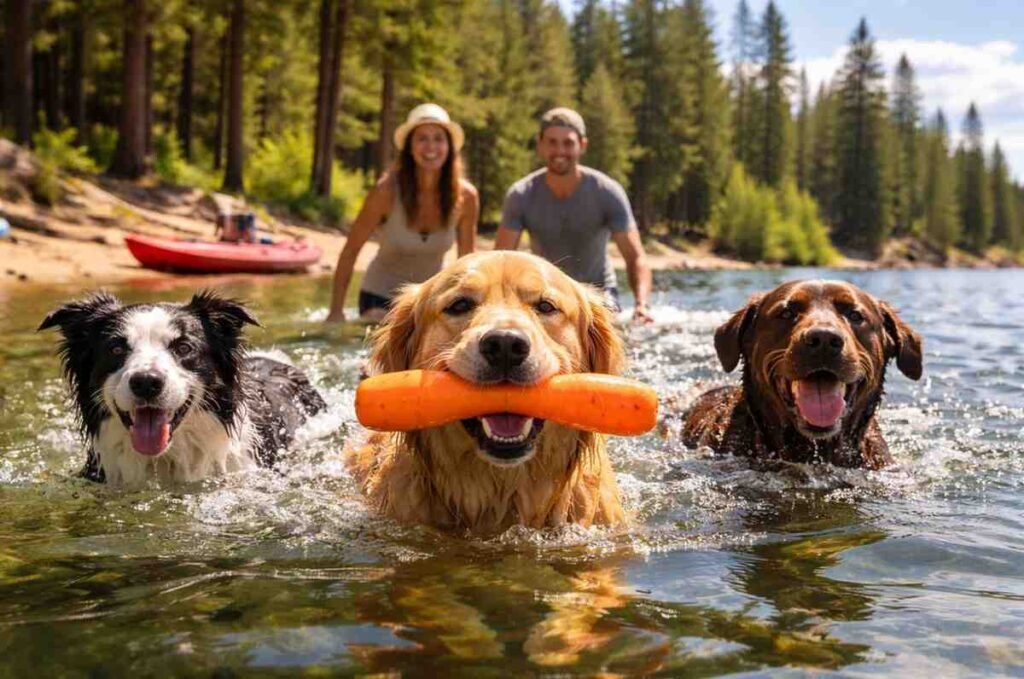
Dogs and water seem to go together in a way that feels almost instinctive. Anyone who has spent time near a lake, dock, or backyard pool has probably seen a dog leap in with zero hesitation, paddling with pure excitement. Some breeds just seem wired for it. Their bodies, energy levels, and instincts all point toward the water.
Over the years, many dogs were bred for jobs that involved retrieving game from ponds, assisting fishermen, or even rescuing people from rough waters. Because of that history, certain breeds still carry those natural swimming abilities today. If outdoor weekends often involve water activities, these dog breeds that enjoy swimming tend to thrive in those environments.
Why Some Dog Breeds Naturally Love Swimming
Not every dog is comfortable in water, but some breeds were literally designed for it. Generations of selective breeding created dogs with physical features and instincts that make swimming easier and more enjoyable.
A few traits show up again and again in dogs that love water:
- Webbed paws that help with propulsion
- Water-resistant coats that keep them warm and buoyant
- Strong tails that help with steering in the water
- High stamina and energy levels are suited for long outdoor activity
These characteristics allow certain breeds to swim efficiently without tiring quickly. Their bodies move smoothly through water, which makes swimming feel natural rather than stressful.
For active households that spend time around lakes, pools, or coastal areas, these breeds often adapt easily to water-centered activities.
Labrador Retriever: The Classic Water Companion
Among all dog breeds that enjoy swimming, the Labrador Retriever stands out as one of the most enthusiastic. Originally developed to retrieve birds and fishing nets from cold waters, Labs have strong swimming instincts that remain deeply ingrained today.
Their thick double coat repels water while their powerful “otter tail” acts like a rudder. When a Labrador enters the water, its body stays balanced and controlled, which helps with endurance during longer swims.
Labs also have a naturally playful temperament. Swimming often becomes a favorite way for them to burn energy. A simple game of fetch in the water can keep a Labrador happy for hours.
Because of their friendly personality and adaptability, they often become ideal companions for families that spend time outdoors.
Golden Retriever: A Natural Athlete In Water
Golden Retrievers share many similarities with Labradors when it comes to swimming ability. Their dense, water-repellent coats and strong hind legs make them smooth, efficient swimmers.
What makes these dog breeds especially enjoyable around water is their eagerness to participate in activities. They often view swimming as another form of play rather than exercise.
Many owners notice that Golden Retrievers instinctively paddle confidently even during their first experiences in shallow water. Their retrieving instinct also means they quickly pick up games like fetching floating toys.
With their gentle temperament and love of activity, Goldens easily fit into households that enjoy outdoor recreation.
Newfoundland: Built For Water Rescue
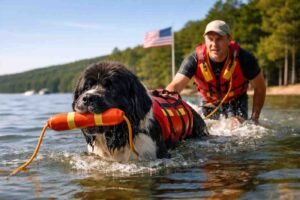
Few dogs demonstrate the power of swimming quite like the Newfoundland. These large dogs were historically used on ships and fishing vessels, where they assisted sailors and performed water rescues.
Newfoundlands possess several features that make them exceptional swimmers. Their webbed feet provide powerful propulsion, while their thick coat protects them in cold conditions.
Despite their size, they move gracefully through the water. Many owners describe watching a Newfoundland swim as surprisingly smooth and controlled.
Their calm personality also makes them reliable around people, which is one reason they were historically trusted for lifesaving work.
Chesapeake Bay Retriever: Built For Tough Waters

The Chesapeake Bay Retriever was developed to retrieve waterfowl in cold, rough coastal environments. This breed has one of the most water-resistant coats among retrievers.
The coat contains natural oils that repel water and help maintain warmth during long swims. Combined with their muscular build, these dogs can handle strong currents and challenging conditions.
Unlike some retrievers that prioritize playfulness, Chesapeake Bay Retrievers tend to be focused workers. Swimming often feels like a job they take seriously.
That determination makes them excellent companions for outdoor enthusiasts.
American Water Spaniel: A True Water Specialist
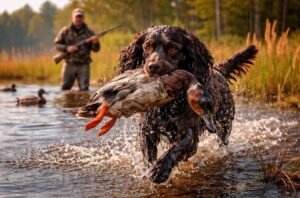
The American Water Spaniel was specifically developed for hunting in wetlands and river environments. This medium-sized dog combines stamina, agility, and natural swimming instincts.
Their curly coat protects them in cooler temperatures, while their compact body helps them maneuver easily through water and marshy terrain.
Many owners appreciate the breed’s versatility. They can participate in outdoor activities while also adapting comfortably to home life.
Swimming becomes both exercise and entertainment for this breed.
Spanish Water Dog: Athletic And Highly Engaged

The Spanish Water Dog is known for its woolly coat and strong working instincts. Originally used for herding and water retrieval, these dogs maintain excellent swimming abilities.
Their intelligence means they enjoy activities that challenge both mind and body. Swimming combined with retrieving tasks often becomes a favorite routine.
Because of their energetic personality, they thrive in environments where regular physical activity is part of daily life.
Helping Dogs Enjoy Water Safely

Even dog breeds that enjoy swimming benefit from a gradual introduction to water. While some jump in confidently, others feel more comfortable learning step by step.
A few practices can make water activities safer and more enjoyable:
- Introduce water slowly and allow the dog to explore at its own pace
- Use floating toys to encourage natural swimming movement
- Supervise swimming sessions, especially in open water
- Provide fresh drinking water to prevent dogs from swallowing too much lake or pool water
With the right environment, swimming can become a rewarding activity for both dogs and their owners.
FAQs: Popular Dog Breeds That Enjoy Swimming And Water Adventures
1. Do all dog breeds naturally know how to swim?
No. While many dogs instinctively paddle in water, some breeds are not comfortable swimmers due to their body structure or lack of exposure.
2. What physical traits help dogs swim better?
Features such as webbed paws, water-resistant coats, muscular bodies, and strong tails help dogs move efficiently through water.
3. Is swimming good exercise for dogs?
Swimming is an excellent low-impact exercise. It helps build muscle, improves cardiovascular health, and provides mental stimulation.
4. Can puppies learn to enjoy swimming?
Yes. With gradual introduction and positive reinforcement, many puppies learn to enjoy water activities as they grow.
Final Thoughts
Many of the most popular companion dogs today were once working animals that spent long hours around water. That history still shapes their instincts. Breeds like Labradors, Newfoundlands, and Portuguese Water Dogs often display a natural enthusiasm for swimming that feels effortless and joyful. Their physical traits, energy levels, and retrieving instincts make them particularly suited for water activities.
For people who enjoy outdoor adventures involving lakes, pools, or coastal areas, these dog breeds that enjoy swimming often become enthusiastic partners. Watching a dog glide through the water with confidence is one of the clearest reminders of how deeply instinct and activity are connected in the canine world.