
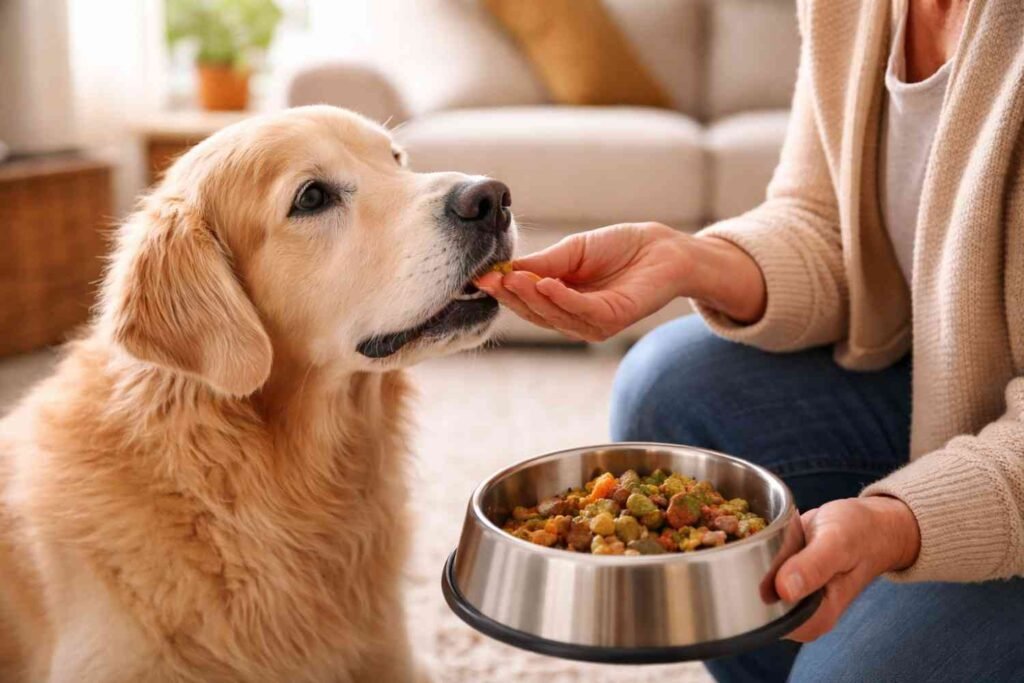
A dog’s relationship with food changes quietly as the years pass. Many owners notice it slowly, an older dog sleeps longer, walks a little slower, and sometimes leaves food in the bowl that used to disappear instantly. Feeding routines that worked for years suddenly don’t feel quite right anymore. That shift is normal, but it also means the diet needs to evolve.
Most dogs begin entering their senior years around age seven, though the timeline varies depending on breed size. Larger breeds often age earlier, while smaller breeds can stay energetic longer. What matters most during this stage is adjusting nutrition to match a slower metabolism, changing digestion, and the physical realities of aging. With the right feeding approach, older dogs can stay active, comfortable, and healthy for many years.
Why Senior Dogs Need Different Feeding Habits
As dogs age, their bodies process food differently. Metabolism slows, activity levels usually drop, and muscle mass gradually declines. At the same time, digestion can become more sensitive.
This combination creates a tricky balance. Older dogs often need fewer calories, but they still require high-quality nutrients to maintain strength and health.
Many owners assume older dogs should eat less protein, but modern veterinary nutrition shows the opposite. Senior dogs actually benefit from easily digestible protein sources to help maintain lean muscle.
The goal isn’t simply feeding less, it’s feeding smarter and more balanced meals that support aging bodies.
Core Nutritional Needs For Senior Dogs

Senior dogs thrive when their diet focuses on a few essential nutritional priorities. These nutrients support muscle maintenance, digestion, joint health, and brain function.
High-Quality Protein
Protein remains critical as dogs age. Without enough protein, muscle loss accelerates, which can reduce mobility and overall strength.
Good sources include:
- Chicken
- Turkey
- Eggs
- Fish
These ingredients provide highly digestible protein that helps maintain muscle without overwhelming the digestive system.
Controlled Calories
Older dogs burn fewer calories than they did during their active years. Overfeeding can quickly lead to weight gain, which places extra pressure on aging joints.
Calorie intake often needs to drop between 12% and 25%, depending on activity levels.
A balanced senior formula or adjusted portion size can help prevent unnecessary weight gain while still meeting nutritional needs.
Increased Fiber
Digestive changes are common in aging dogs. Many experience slower digestion or occasional constipation.
Adding fiber from ingredients like:
- Pumpkin
- Beet pulp
- Whole grains
can support smoother digestion and improve gut health.
Healthy Fats For Joint And Brain Health
Omega-3 fatty acids, especially EPA and DHA from fish oil, play an important role in senior dog nutrition.
These fats help:
- Reduce joint inflammation
- Support cognitive function
- Improve skin and coat health
For dogs dealing with stiffness or arthritis, these nutrients can make a noticeable difference in daily comfort.
How Much To Feed A Senior Dog
Portion size or signs of food intolerance are one of the most common questions owners face when feeding older dogs.
There isn’t a universal number because feeding amounts depend on factors like weight, breed, activity level, and metabolism. However, a helpful starting point is to monitor body condition rather than relying only on feeding charts.
A healthy senior dog should:
- Maintain visible waist definition
- Have ribs that can be felt but not easily seen
- Avoid noticeable weight gain or loss
If a dog begins gaining weight, portion sizes should be slightly reduced. If muscle loss appears, increasing protein quality may help.
Consistency matters more than dramatic changes. Small adjustments over time tend to work best.
Feeding Schedule Adjustments That Help Older Dogs
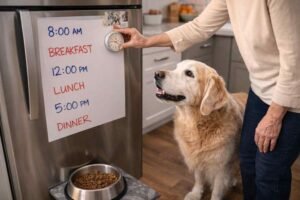
Feeding schedules can make a significant difference in how comfortable an older dog feels after meals.
Many senior dogs benefit from two or three smaller meals per day instead of one large meal. This approach supports easier digestion and helps maintain stable energy levels.
Simple habits can improve feeding routines as dogs age:
- Serve food at room temperature to enhance aroma and taste, especially if a dog’s sense of smell is fading
- Use raised food bowls for dogs with joint stiffness or arthritis
- Add warm water or low-sodium broth to kibble to increase hydration and improve flavor
These small adjustments often make meals more appealing and comfortable.
Helping Senior Dogs With Appetite Or Dental Issues
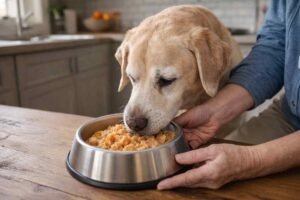
Aging dogs sometimes become picky eaters or struggle with chewing hard food. Dental issues are common, and they can affect appetite even when a dog is hungry.
Softening meals can help significantly.
Owners often find success by:
- Mixing wet and dry food
- Soaking kibble in warm water
- Offering softer textures that are easier to chew
Improving texture and smell can often restore interest in meals.
Transitioning To A Senior Dog Diet Safely
Switching food too quickly can upset a dog’s digestive system. Gradual transitions allow the body to adjust without causing stomach problems.
A safe transition typically takes 7–10 days:
- Day 1–3: Mostly current food with a small portion of the new diet
- Day 4–6: Equal mix of both foods
- Day 7–10: Mostly new food with a small portion of the old food
This gradual process helps avoid digestive discomfort and ensures the dog adapts smoothly to the new formula.
Warning Signs That A Senior Dog’s Diet Needs Adjustment

Sometimes feeding issues signal underlying health concerns rather than simple dietary preferences.
Pay attention to changes such as:
- Sudden weight loss
- Rapid weight gain
- Loss of appetite
- Excessive thirst
- Digestive issues
These symptoms can sometimes indicate conditions like dental pain, kidney disease, or metabolic changes that require veterinary evaluation.
FAQs: Simple Feeding Guidelines For Senior Dogs Every Owner Should Know
1. What age is considered senior for dogs?
Most dogs are considered senior around age seven, though larger breeds may reach this stage earlier, while smaller breeds often age more slowly.
2. How often should senior dogs be fed?
Most older dogs do well with two meals per day. Some benefit from three smaller meals if digestion becomes sensitive.
3. Should senior dogs eat less protein?
No. Older dogs often need high-quality protein to maintain muscle mass and overall health.
4. Is wet food better for senior dogs?
Wet food can help dogs with dental problems or reduced appetite, but many dogs do well with softened dry food as well.
Final Thoughts
Feeding an older dog is less about strict rules and more about understanding how their body changes with age. Energy needs shift, digestion slows, and joints may need extra support. A balanced diet with quality protein, controlled calories, fiber, and healthy fats can help maintain strength and comfort through the later years. Small adjustments like softer food textures, smaller meals, or slightly raised bowls can make daily life noticeably easier for aging dogs.
At the end of the day, the goal is simple: keep meals enjoyable while supporting long-term health. When feeding habits evolve alongside a dog’s needs, those senior years can remain active, comfortable, and full of familiar routines.