
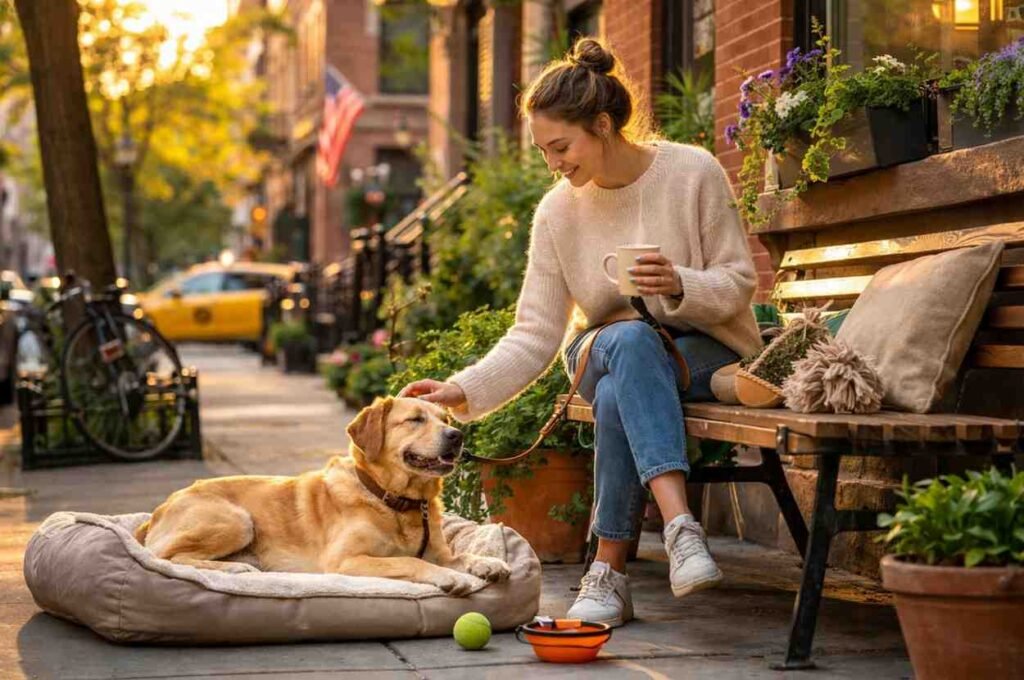
City life with a dog can be surprisingly rewarding, but it also asks more from both of you. Busy sidewalks, elevator rides, traffic noise, and limited space all shape how a dog experiences the world. Many owners assume the solution is simply more exercise, yet the real answer often lies in structure, mental stimulation, and thoughtful training.
Dogs adapt incredibly well to city environments when their daily life feels predictable and engaging. A calm dog in an apartment usually isn’t the one with the longest walks; it’s the one with the clearest routine, strong urban manners, and enough mental activity to balance the lack of open space. With a few practical adjustments, city living can become a comfortable and stimulating environment for both you and your dog.
Why City Dogs Need A Different Kind Of Routine
Living with a dog in an apartment or dense neighborhood changes the rhythm of daily life. Dogs encounter constant stimulation: people walking by, delivery carts rolling down hallways, traffic sounds, and unfamiliar smells at every corner. Without structure, that level of stimulation can easily lead to anxiety, barking, or restless behavior.
Urban dogs benefit from routines that balance exercise, calm downtime, and mental enrichment. Predictable feeding times, consistent walk schedules, and familiar cues throughout the day help dogs understand what to expect. When dogs can predict their environment, they relax more easily.
A typical day for a calm city dog often includes:
- Morning walk with structured leash practice
- Short training or enrichment activity indoors
- Quiet rest period while the household is busy
- Evening walk focused on exploration and sniffing
- A calming nighttime routine
Consistency builds emotional stability. Even small things like using the same cue words or following similar walking routes help dogs feel secure.
Master Urban Safety And Manners
Training becomes far more important when dogs navigate crowded sidewalks and shared spaces every day. Certain behaviors that might seem optional in suburban settings become essential safety skills in a city environment.
Urban dog training should focus on impulse control and environmental awareness. Teaching these behaviors early makes daily outings much smoother.
Key skills every city dog should learn include:
- Leave It – protects dogs from trash, food scraps, or harmful items on sidewalks.
- Automatic curb sits – encourage dogs to pause at street crossings instead of rushing forward.
- Elevator manners – entering calmly and sitting quietly prevents tension in small spaces.
- Doorway control – waiting at building entrances or store doors prevents sudden bolting.
These small habits make a noticeable difference. Dogs that understand boundaries move through busy areas with far less stress, and owners gain more confidence handling crowded environments.
Managing Noise, Crowds, And Urban Stress

City environments are rarely quiet. Sirens, construction sounds, and heavy traffic can easily overwhelm dogs that are sensitive to noise. Instead of expecting dogs to ignore these sounds naturally, gradual exposure works far better.
Noise desensitization can be surprisingly effective. Playing recordings of city sounds at low volumes during relaxed moments paired with treats or toys helps dogs build positive associations. Over time, they become less reactive when those sounds occur outside.
Another helpful approach is sound masking inside the apartment. Many owners use white noise machines, calm music, or ambient background sound to soften hallway noises or street activity that might trigger barking.
Dogs also benefit from having a dedicated quiet space. Creating a small “safe zone” away from windows or heavy foot traffic allows dogs to decompress after busy walks or stimulating outings.
Smarter Exercise For Dogs Without A Yard
Many owners assume apartment dogs need extremely long walks to compensate for limited space. In reality, mental stimulation often tires dogs more effectively than physical activity alone.
Fifteen minutes of focused brain work can sometimes calm a dog more than a long walk. Mental enrichment challenges the brain and prevents boredom-driven behaviors.
Here are simple ways to provide enrichment indoors:
- Puzzle feeders and treat-dispensing toys
- Snuffle mats that encourage scent exploration
- Hiding treats around the apartment for “search games.”
- Cardboard shredding boxes filled with paper and kibble
- Short training sessions that reinforce commands
Indoor enrichment helps maintain balance on days when weather or schedules limit outdoor time. It also teaches dogs to relax indoors rather than constantly seeking stimulation.
Making Small Spaces Work For Your Dog
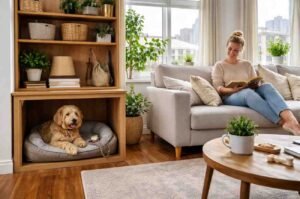
Living with a dog in an apartment often requires creative use of space. Fortunately, dogs care less about square footage and more about how their environment is structured.
Clear zones inside the home help dogs understand where different activities happen. A cozy resting area, a designated toy space, and an enrichment corner create subtle structure within the apartment.
Some owners also use multi-functional furniture, such as storage benches or ottomans to organize dog supplies, as it indicates that your dog is happy while keeping floors open for play. Keeping clutter minimal allows dogs to move comfortably even in smaller living areas.
For those living in high-rise buildings, some people use balcony grass patches or indoor potty solutions to reduce the stress of frequent elevator trips, especially for young puppies or senior dogs.
Enriching Everyday City Walks
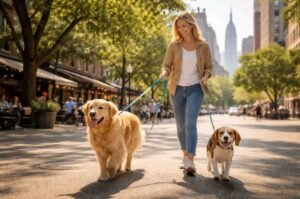
Not every walk needs to be a fast exercise session. Some of the most calming outings are what trainers often call “sniffari” walks, where dogs are encouraged to explore scents at their own pace.
Sniffing provides powerful mental stimulation. It allows dogs to process their environment, release energy, and engage their natural instincts.
Urban walks can also double as controlled socialization opportunities. Visiting dog-friendly stores, quiet cafés with outdoor seating, or neighborhood parks during slower hours helps dogs build confidence around new environments.
The key is balance. Too much stimulation can overwhelm dogs, while gentle exposure in controlled doses builds resilience and calm behavior.
FAQs: Urban Living Tips For Dog Owners Who Want Happier, Calmer Dogs
1. How do dogs adjust to apartment living?
Dogs adjust well when they have consistent routines, daily exercise, and enough mental stimulation. Structure helps them feel secure even in busy environments.
2. How much exercise does a city dog need?
Most dogs benefit from two daily walks plus mental enrichment activities. Puzzle toys, scent games, and short training sessions can complement physical exercise.
3. How can I reduce barking in an apartment?
Reducing barking often involves managing triggers. White noise, structured routines, and sufficient mental stimulation can significantly decrease reactive barking.
4. Are some dog breeds better suited for city living?
Many breeds adapt well to apartment life as long as their exercise and enrichment needs are met. Temperament and training often matter more than breed alone.
Final Thoughts
City life with a dog works best when owners focus on routine, training, and mental engagement rather than simply trying to burn off energy. Urban environments naturally expose dogs to more stimulation than quieter areas, so helping them develop calm habits and predictable routines makes a huge difference. When dogs understand their surroundings and know what to expect from their day, they become more relaxed and confident companions.
With thoughtful training and a few creative adjustments, dogs can thrive in busy neighborhoods just as comfortably as they would in larger spaces.