

Living with a dog teaches you something quickly: physical exercise alone isn’t always enough. I’ve seen dogs come back from a long walk and still pace around the house, looking for something to do. The missing piece is often mental stimulation. Dogs are problem solvers by nature. When their brains are engaged, they feel calmer, more satisfied, and far less likely to invent their own entertainment by chewing furniture or barking at nothing.
The interesting part is how powerful the brain’s work can be. Around fifteen minutes of focused mental activity can tire a dog out as much as a long run. That’s because thinking, sniffing, and problem-solving use different parts of a dog’s brain. The good news is you don’t need expensive tools or complicated routines. Many of the best ways to mentally stimulate your dog at home are simple games you can set up in minutes.
Why Mental Stimulation Matters For Dogs

Mental stimulation plays a major role in a dog’s emotional balance and behavior. Dogs that don’t get enough brain activity often develop boredom-related habits like excessive barking, digging, chewing, or restlessness. When their minds are challenged regularly, they feel more relaxed and focused.
Brain games also strengthen the bond between dogs and their owners. Teaching a trick, playing a scent game, or solving a puzzle together becomes a shared experience. Over time, these activities build confidence in dogs and improve their ability to concentrate. Many trainers even use mental exercise as a way to manage high-energy breeds or anxious dogs.
Another advantage is that mental stimulation works well indoors. Rainy days, busy schedules, or apartment living don’t have to limit your dog’s enrichment. With the right activities, your living room can become a playground for your dog’s brain.
Easy Ways To Mentally Stimulate Your Dog At Home

Dogs love challenges that involve scent, problem-solving, and rewards. The best activities combine these instincts.
Here are some effective dog enrichment activities you can try at home:
- Find It Game – Hide treats or a favorite toy around the house and encourage your dog to search using the command “find it.”
- The Shell Game – Place a treat under one of three cups, shuffle them, and let your dog figure out where the reward is.
- Muffin Tin Puzzle – Hide treats inside a muffin tin and cover each section with tennis balls so your dog must move them.
- Scatter Feeding – Instead of feeding from a bowl, scatter kibble across the floor or a snuffle mat to encourage natural foraging.
- Hide And Seek – Have someone hold your dog while you hide in another room, then call them to find you.
These dog brain games tap into natural instincts like sniffing and searching. Many dogs become deeply focused during scent games because their sense of smell is their strongest tool for understanding the world.
Turn Mealtime Into A Brain Game

One of the easiest ways to add brain exercise to your dog’s day is by changing how they eat. Instead of serving food in a bowl, you can turn meals into an interactive challenge.
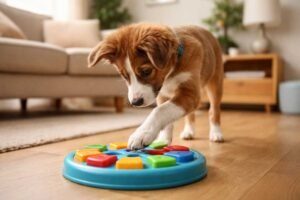
Puzzle toys and treat-dispensing toys are excellent for this purpose. A stuffed rubber toy filled with peanut butter, yogurt, or mashed banana can keep a dog occupied for a long time. Freezing the toy makes the challenge last even longer, encouraging slow and thoughtful problem-solving.
Another simple method is rotating feeding activities throughout the week. One day might involve a puzzle feeder, another day scatter feeding, and another using a snuffle mat. These small changes keep dogs engaged because the experience feels different every time.
Interactive feeding also slows down fast eaters and encourages dogs to think about how to access their food. Over time, this type of mental exercise becomes a routine that dogs look forward to.
Training Games That Challenge Your Dog’s Mind
Training is often underestimated as a form of mental stimulation for dogs. Even short sessions can provide intense cognitive engagement. Teaching new commands forces dogs to focus, remember patterns, and respond to cues.
Start with simple tricks that encourage movement and thinking. Commands like spin, roll over, or high five challenge coordination while keeping the session fun. A five-minute training routine can make a noticeable difference in a dog’s mental energy.
You can also take training further by teaching dogs the names of their toys. Many dogs learn to distinguish between objects like “ball,” “rope,” or “frisbee.” Asking them to fetch a specific toy becomes a brain game that strengthens memory and listening skills.
Another creative activity is teaching a “tidy up” command. Dogs learn to pick up their toys and drop them into a basket. Beyond being entertaining, this exercise combines obedience training with problem-solving.
DIY Enrichment Activities Using Household Items

Dog enrichment doesn’t require expensive gear. Some of the most effective interactive dog games use everyday household items.
A simple cardboard “destruction box” can become an exciting puzzle. Fill a box with crumpled paper and hide small treats inside. Dogs must dig, sniff, and shred the paper to uncover the rewards. Many dogs love this activity because it allows safe exploration and natural digging behavior.
Understanding dog body language is another great option. Chairs can create tunnels, pillows can become obstacles, and broomsticks can act as jumps. Setting up a small course in the living room encourages dogs to think about movement and direction.
Passive stimulation can also play a role. Creating a safe window spot where your dog can watch outdoor activity provides visual and scent stimulation. Even small environmental changes like this can keep curious dogs mentally engaged.
Frequently Asked Questions
1. How much mental stimulation does a dog need each day?
Most dogs benefit from at least 15–30 minutes of mental exercise daily. This can include training sessions, scent games, puzzle toys, or interactive feeding activities.
2. What are the best indoor dog activities for bored dogs?
Scent games, hide and seek, puzzle feeders, and short training sessions are among the most effective indoor dog activities because they challenge a dog’s brain and natural instincts.
3. Can mental stimulation replace physical exercise for dogs?
Mental stimulation cannot completely replace physical activity, but it can significantly reduce excess energy and boredom. Combining both types of exercise creates a balanced routine.
4. Do puzzle toys really help dogs?
Yes. Puzzle toys encourage problem-solving, slow down eating, and keep dogs mentally engaged. They are commonly recommended by trainers for enrichment and boredom prevention.
Final Thoughts
Mental stimulation often gets overlooked in everyday dog care, yet it can transform how dogs behave and feel at home. When dogs are given opportunities to think, sniff, and solve problems, their energy becomes more balanced and focused. Instead of searching for trouble, they spend their time exploring challenges that actually satisfy their instincts.
Even small daily brain games can make a big difference. A scent search, a short training session, or a puzzle toy can turn an ordinary afternoon into a rewarding experience for your dog.